
AI visibility planning series · Research checked October 29, 2026
A patient choosing between a crown, an implant consultation, and postponing care needs more than a list of dental services.
The useful answer is rarely just “we offer implants.” Patients want to know whether a treatment fits their circumstances, what alternatives exist, what the estimate includes and how the practice will help them feel comfortable. A dental website should let a prospective patient understand the decision without pretending that a webpage can replace an examination.
What this list is: 100 editorially selected questions a dentist should be prepared to answer. It combines professional consumer guidance with our proposed customer-journey prompts. It is not a measured ranking, a search-volume report or a dataset of observed AI conversations. No format guarantees an AI recommendation.
Start with the questions that can change a decision
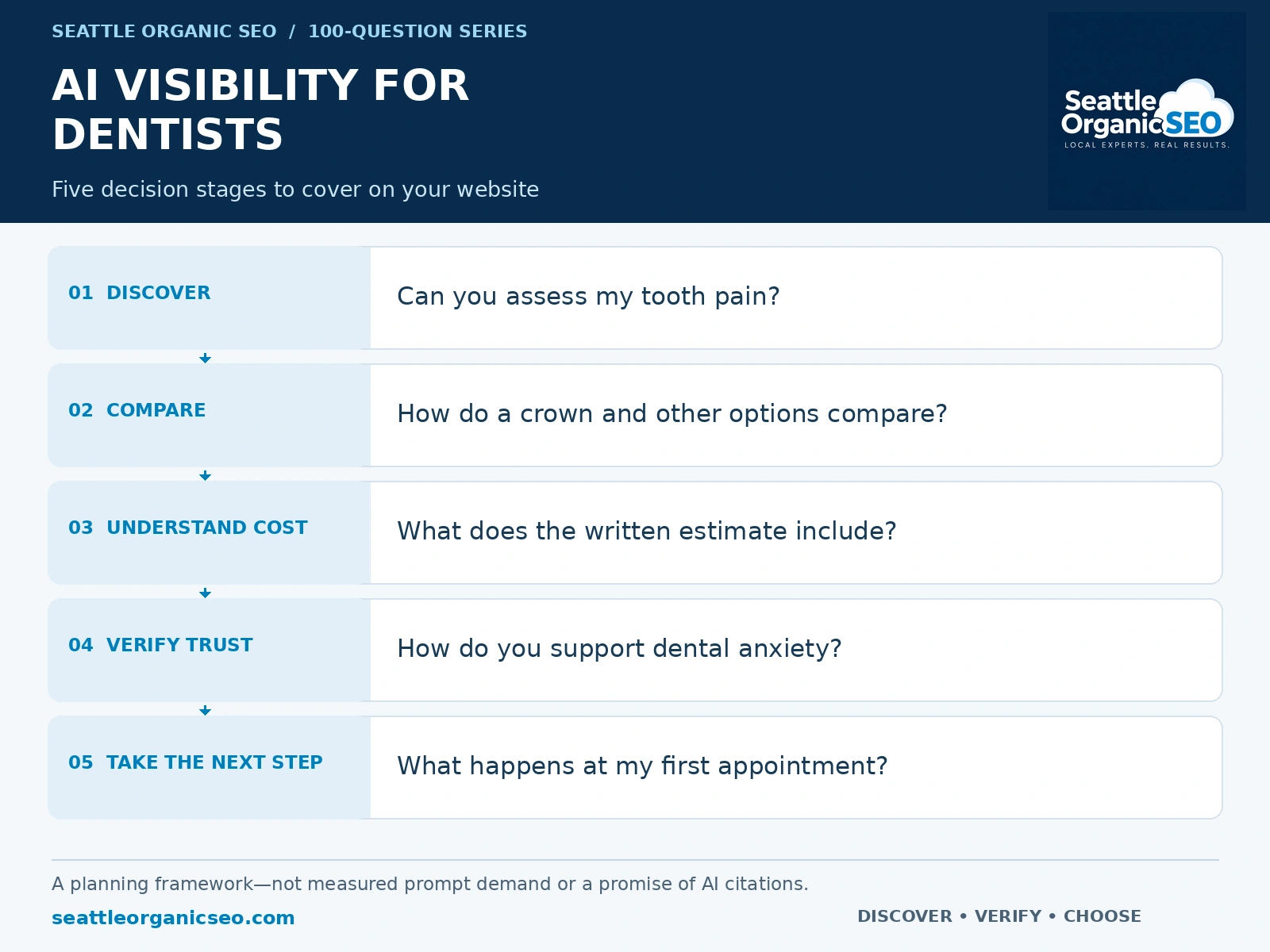
Start with the 12 questions below if they match the services you actually offer. This is our proposed pilot shortlist, not a claim about which questions receive the most searches. Validate it against anonymized inquiry themes, front-desk questions and sales or consultation objections.
- Question 11: What should I do about a toothache before my appointment?
- Question 28: Will you explain my X-rays and findings?
- Question 31: How do a filling and a crown compare?
- Question 34: How do implants, bridges and dentures compare?
- Question 35: What can clear aligners address compared with braces?
- Question 41: How much is a new-patient exam without insurance?
- Question 43: What determines the price of a dental crown?
- Question 45: Can I get an itemized estimate before agreeing?
- Question 48: What could I owe if insurance denies a claim?
- Question 56: Can I pause treatment if I feel uncomfortable?
- Question 58: Can I discuss previous difficult dental experiences privately?
- Question 92: Can I book online without calling?
What AI search research changes—and what remains an experiment
Toth’s HAR observations illuminate research steps, not proven ranking factors. Google documents query fan-out; Ahrefs observed many non-search answers. Seer reports fan-out variability.
Our working hypothesis is that a business is easier to evaluate when its own pages explain its services, suitability, prices, limitations and next steps accurately. That is the rationale for this guide. Whether a particular answer format changes citations, recommendations or inquiries must be tested. A simulated prompt expansion is a planning aid, not a record of what an AI system searched.
The presentation approach to test: Treatment decision cards
Keep the existing dentistry service pages. Add an options card to the relevant treatment page, a pricing explanation to payment information, and anxiety support to the first-visit page. The 100-question guide is the planning hub, not a replacement for these pages.
| Decision | What to explain | Where it belongs |
|---|---|---|
| Crown versus alternatives | Assessment-dependent suitability, tradeoffs and estimate inclusions | Relevant treatment page |
| Anxiety before booking | Real comfort options, consent and consultation process | First-visit page |
| Affordability | Actual fee components and verified payment choices | Payment page |
The table illustrates how to organize the information. The underlying facts must come from the business and, where relevant, a qualified professional. Keep essential text visible and readable on mobile. A visitor should not have to open dozens of accordion panels to learn the basic service, cost and eligibility facts.
The 100-question planning bank
Each section includes an answer brief that applies to its ten questions. Draft the answers using your actual facts, add supporting evidence where a claim needs it, explain exceptions and give the reader an appropriate next step. Publish related answers together; the numbering is for planning and tracking, not priority.
1–10. Choosing a practice
Decision stage: Discovery. How to answer: Publish a factual practice profile with clinician credentials, patient ages served, accessibility and appointment policies. Link to license verification; avoid unsupported best-dentist claims.
- How do I choose a dentist in my neighborhood?
- Are you accepting new patients?
- Do you treat children and adults in one practice?
- Which dentist will actually treat me?
- How can I verify your dental license?
- What additional training do you have for my treatment?
- Can you accommodate patients with disabilities?
- Which languages does your team speak?
- Do you offer evening or weekend appointments?
- How do you help patients who are afraid of the dentist?
11–20. Symptoms and urgency
Decision stage: Need recognition. How to answer: Have a dentist review symptom content and distinguish routine booking from urgent assessment. Put the actual phone triage process beside the answer; do not diagnose through a marketing page.
- What should I do about a toothache before my appointment?
- Can you see me today for dental pain?
- How do you handle a broken tooth?
- What happens if I lose a filling or crown?
- Can bleeding gums wait until my next cleaning?
- Who handles dental emergencies after hours?
- What should I do if a tooth is knocked out?
- When should facial swelling receive urgent medical attention?
- Can you assess pain when biting?
- How do I know whether to contact a dentist or emergency department?
21–30. First visit and diagnosis
Decision stage: Assessment. How to answer: Show an appointment timeline and explain how examination findings become recommendations. Use an illustrative workflow rather than invented patient results.
- What happens during a first dental visit?
- How long should I allow for my appointment?
- Which records should I bring from my previous dentist?
- Will I need dental X-rays and why?
- How do you decide which imaging is appropriate?
- What is included in an oral cancer screening?
- How do you check for gum disease?
- Will you explain my X-rays and findings?
- Can I receive a written treatment plan?
- Can I request a second opinion before treatment?
31–40. Treatment comparisons
Decision stage: Comparison. How to answer: Use a clinician-reviewed options table: suitability, tradeoffs, maintenance, uncertainty and cost components. Explain why an examination can change the options.
- How do a filling and a crown compare?
- When might a tooth need root canal treatment?
- What are the alternatives to extracting a tooth?
- How do implants, bridges and dentures compare?
- What can clear aligners address compared with braces?
- How do veneers and whitening differ?
- What are the tradeoffs between different crown materials?
- When is a deep cleaning different from a routine cleaning?
- What happens if I delay recommended treatment?
- Which treatments would you refer to a specialist?
41–50. Prices and payment
Decision stage: Cost. How to answer: Publish actual practice-approved fees or ranges with inclusions and exclusions. Keep insurer estimates separate from guaranteed coverage.
- How much is a new-patient exam without insurance?
- What is included in your cleaning price?
- What determines the price of a dental crown?
- Does an implant estimate include the restoration and imaging?
- Can I get an itemized estimate before agreeing?
- Which dental insurance plans are you in network with?
- How do you verify benefits before treatment?
- What could I owe if insurance denies a claim?
- Do you offer payment plans or membership plans?
- Are financing interest and fees explained in writing?
51–60. Comfort and consent
Decision stage: Risk and suitability. How to answer: Describe available comfort options and who assesses eligibility. Explain consent, alternatives and monitoring without presenting sedation as universally suitable.
- What numbing options do you offer?
- What sedation options are available at your practice?
- Who determines whether sedation is appropriate?
- Who administers and monitors sedation?
- Will I need someone to drive me home?
- Can I pause treatment if I feel uncomfortable?
- How do you explain treatment risks before consent?
- Can I discuss previous difficult dental experiences privately?
- How do you accommodate a strong gag reflex?
- Can treatment be divided into shorter visits?
61–70. Family and individual needs
Decision stage: Suitability. How to answer: Build real service subsections for the populations actually served. Avoid duplicated city or demographic pages that offer no additional information.
- When should I arrange my child’s first dental visit?
- How do you help children feel comfortable?
- Can you discuss dental care during pregnancy?
- How do medications affect the care plan you recommend?
- Do you treat patients with dry mouth?
- Can you help patients with sensitive teeth?
- Do you work with older adults who have dentures?
- How do you coordinate care for medically complex patients?
- Can caregivers attend an appointment with permission?
- What support is available for patients with sensory sensitivities?
71–80. Results and limitations
Decision stage: Expectations. How to answer: Explain what can be assessed, what can vary and how maintenance affects results. Use consented educational illustrations; do not promise an outcome from a photograph.
- How long might my treatment take?
- What factors could change the treatment plan?
- How do you evaluate whether treatment worked?
- How long can a crown last with appropriate care?
- What maintenance does a dental implant require?
- Can teeth whitening results vary?
- What are the limitations of cosmetic dental treatment?
- What happens if a restoration needs adjustment?
- What is your policy if I am dissatisfied with treatment?
- Do you explain the risks of doing no treatment?
81–90. Recovery and ongoing care
Decision stage: Retention. How to answer: Place procedure-specific instructions on the relevant service page and supply personalized instructions after care. Clearly state how to obtain help.
- What should I expect after an extraction?
- Which symptoms after treatment should prompt a call?
- How do I contact you about pain after a procedure?
- When can I return to work after treatment?
- What eating instructions will I receive?
- How should I clean around a new restoration?
- When will I need a follow-up appointment?
- How do you set my cleaning schedule?
- What happens if I move during a treatment course?
- Can you transfer my records to another dentist?
91–100. Booking and verification
Decision stage: Conversion. How to answer: Keep booking facts consistent across the website and accurate business profiles. Track attended new-patient appointments rather than clicks alone.
- How soon can I book a new-patient appointment?
- Can I book online without calling?
- What is your cancellation policy?
- Where can I park near the practice?
- Is the entrance wheelchair accessible?
- How do I send records securely?
- Where can I read independent patient feedback?
- How do you respond to complaints while protecting privacy?
- What information do you need before confirming an appointment?
- What is the next step if I want a treatment consultation?
How to turn a question into a useful answer
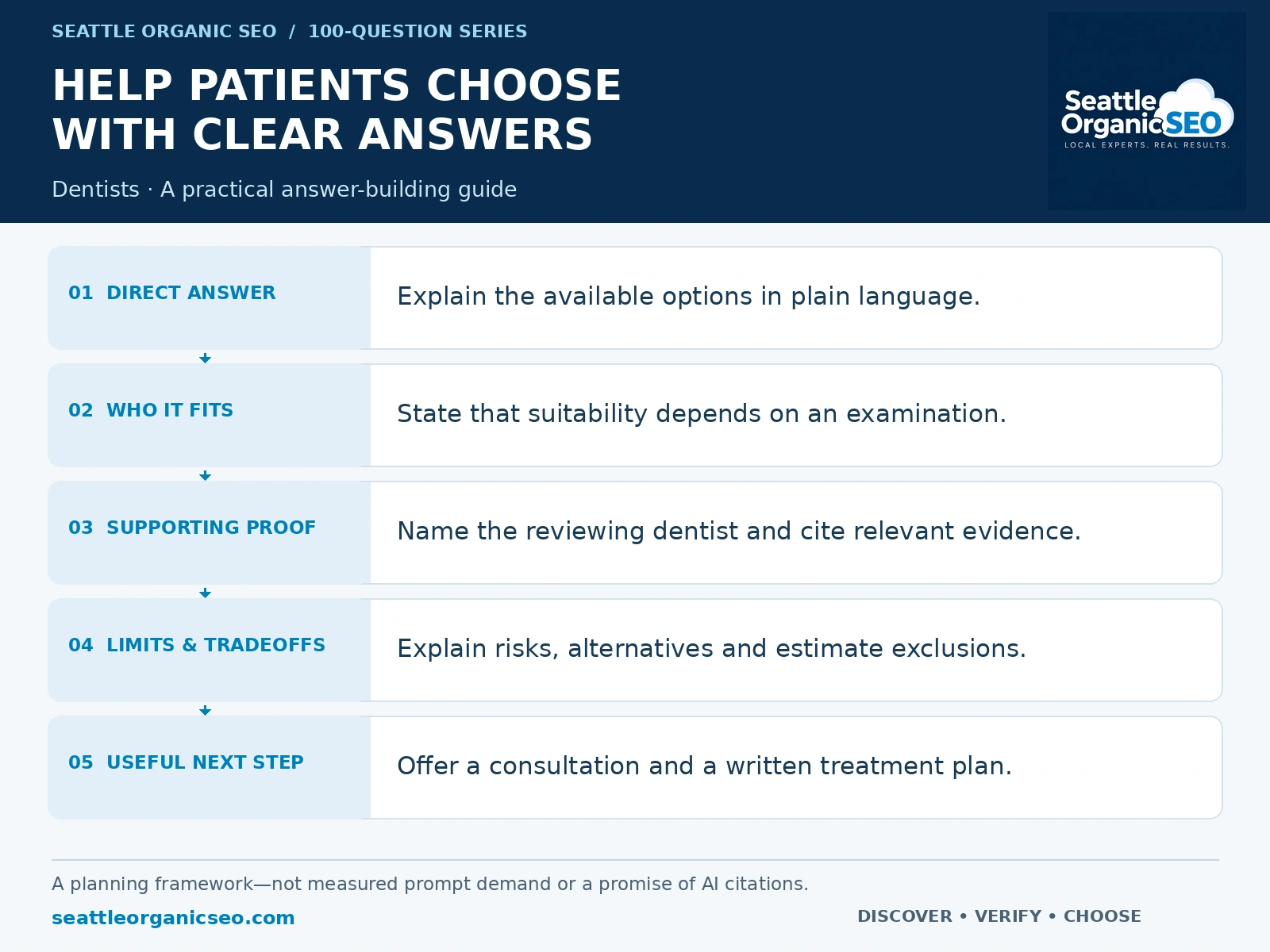
Use this editorial sequence: give the direct answer; explain who it applies to; name the evidence or factual basis; disclose relevant limits; then offer the next step. Use as much space as the topic needs. Do not pad an answer to a target word count or repeat the business name in every sentence. Keep general education distinct from advice that requires an individual assessment.
How do implants, bridges and dentures compare?
Illustrative answer draft—not a verified business policy: An examination is needed to establish which options are appropriate. Our consultation compares the suitable options, including treatment stages, maintenance, material risks and estimated costs. We explain why an option may not fit and provide a written plan before you decide.
Before using it: Add the services actually offered, who assesses suitability and what is included in the estimate.
Can I get an itemized estimate before agreeing?
Illustrative answer draft—not a verified business policy: Before treatment, ask for separate line items for examination, imaging, the procedure and any restoration or laboratory work. Our practice should state when the estimate is provided, what may change it and how benefit estimates are verified.
Before using it: Rewrite this as the practice’s actual policy; do not present this editorial template as an existing promise.
Example AI conversation to use for research
This conversation is a proposed test, not a transcript or a claim about prompt popularity. Replace Seattle with a genuine service location and use hypothetical circumstances. Never put identifiable patient, client, legal or financial records into a public AI test.
| Turn | Proposed prompt | What to record |
|---|---|---|
| 1 · Explore | I am comparing a crown and an implant consultation in Seattle, have dental anxiety, and want costs explained before committing. | Which needs the answer identifies and whether web search occurs |
| 2 · Compare | What should I verify about sedation, the written estimate and alternatives before choosing? | Named providers, stated tradeoffs, cited URLs and missing facts |
| 3 · Verify | For each provider you mentioned, separate facts you can verify from assumptions. Link to official pages for services, costs, eligibility and booking. Say when information is unavailable. | Accuracy and source quality; do not reward confident unsupported claims |
| 4 · Decide | What should I confirm directly before contacting a provider, and what would make an option unsuitable? | Remaining objections and a safe, appropriate next step |
Also test the first two prompts separately in fresh conversations: follow-ups inherit the previous answer and are not independent observations. Keep branded checks (“What does [Business] offer?”) separate from unbranded discovery checks. A branded mention is not evidence that the system would recommend the business without being prompted.
Build a website people and AI can verify
We’ve created thousands of websites that immediately rank for the client’s targeted terms because they start SEO- and GEO-friendly, with our customizations built in.
Proof to prioritize: Named dentist review, license verification, actual itemized estimate policy and verified payment options.
Assign one person to maintain core facts: legal or trading name, location, services, credentials, pricing method, availability and contact routes. Reconcile discrepancies on legitimate third-party profiles. Seek relevant editorial coverage through useful expertise and accurate information; avoid purchased endorsements or fabricated reviews. Follow profession-specific testimonial rules and protect client privacy. A process explanation or fictional sample can demonstrate competence without a client case study.
Before adding new pages, check whether the answer already has a sensible home. Improve that page, link to it from relevant service content and remove conflicting versions. Review rendered text, indexing settings, canonicals, redirects and access restrictions. Use accurate structured data where appropriate; do not treat markup or a special AI file as proof of improved visibility. Do not turn the question bank into thin pages for every city and wording variation.
Want a website built for your targeted terms?
Let’s discuss an SEO- and GEO-friendly website customized for your business and the customers you want to reach.
A 30-day pilot with a measurable next step
| Period | Action | Record |
|---|---|---|
| Days 1–7 | Select 12 relevant questions, verify business facts and capture a baseline before editing. | Exact prompts, model or product, mode, date, location, sources and complete answers. |
| Days 8–14 | Add a compact options card above the existing crown-service explanation. | URLs changed, exact change date, professional or operational sign-off where needed. |
| Days 15–21 | Check that updated pages render correctly; reconcile relevant public profile errors. | Indexing status, stale facts, broken booking routes and unrelated site changes. |
| Days 22–30 | Repeat the baseline tests and review conversion quality. | Counts and rates alongside sample sizes; no automatic winner declaration. |
Primary business measure: Attended crown consultations per eligible service-page visit. Quality check: No increase in inquiries that mistake an estimate for a final treatment quote.
For the first pilot, run the same 12 prompts three times per platform in a baseline window and again after the change, using fresh sessions for standalone tests. At three platforms that is 108 responses per window. Keep location, language, search mode and account conditions as comparable as possible; record the model or product version available at the time. Compare each platform separately. Missing or failed runs belong in the log, and “no web search” is a result, not a failure to discard.
Report brand mentions, explicit recommendations, citations to the business’s own domain, factual errors and qualified business outcomes as separate measures. Show numerators and denominators—for example, recommended in 4 of 36 completed runs—rather than an unsupported universal visibility score. Responses from the same prompt are related observations; do not assume 108 runs are 108 independent customers.
Track referral sessions where observable, booking completion and the appropriate downstream outcome. Use an optional “How did you hear about us?” field to capture otherwise unattributed discovery, without treating self-reports as perfect attribution. Keep sensitive information out of analytics. For results that mature after 30 days, retain the original inquiry date and continue cohort follow-up.
A before-and-after change can suggest progress but cannot establish causation. Log seasonality, promotions, competitor changes, rankings and platform updates. Compare with suitable unchanged pages or stagger a rollout where feasible. Thirty days may be too short for indexing, visibility or conversion conclusions. Extend the observation period when evidence is sparse; one favorable answer is not a win.
How to learn from this format
This guide uses treatment decision cards as an editorial hypothesis. Different industries have different demand and conversion patterns, so comparing this article’s raw performance with another profession’s article cannot identify the best format. To test format itself, use comparable pages within the same profession and keep substantive information as similar as possible. For human conversion tests, randomize visitors when traffic allows. For AI visibility, use matched pages or a staged rollout and report the remaining uncertainty.
Sources and scope
ADA consumer resources support examining provider choice, dental visits and payment questions. The expanded bank below is our editorial synthesis, not an ADA ranking of patient demand.
- Google: AI features and your website
- Steve Toth: HAR-based Deep Research observations
- Ahrefs: ChatGPT query fan-out study
- Seer: interpreting query fan-outs
Research access date: October 29, 2026. The 100 questions, page mappings, examples and pilot are Seattle Organic SEO’s proposed editorial applications. They have not been validated against this profession’s private inquiry data or live AI recommendation tests. This is a marketing guide; clinical, legal, tax and financial material requires appropriate professional review before a business uses it as public advice.
Written by the Seattle Organic SEO Team
The Seattle Organic SEO team combines more than 30 years of hands-on client experience across SEO, paid media, email marketing and affiliate marketing. Our team has worked for leading technology companies, including Amazon, Expedia and Google-acquired DoubleClick. We bring that experience to source-based research, transparent analysis and practical guidance for Seattle businesses. Learn more about our team and approach.
Want your dental practice to show up more effectively in AI search?
Seattle Organic SEO can help you create an SEO- and GEO-friendly website, answer the questions your customers ask, and measure whether greater visibility leads to qualified inquiries. Explore our GEO services and learn more about our team and approach.