
Published April 22, 2026 | Dental SEO | 8 min read
We analyzed over 800 dental keywords — monthly search volumes, year-over-year trends, competition levels, and cost-per-click data — to build a clear picture of how Seattle-area patients are searching for dental care right now.
The findings are more interesting than a simple ranking list. Some of the most-searched dental keywords in the country are collapsing in volume. Others are growing fast and remain nearly uncontested. And a handful of specific keyword categories reveal exactly where patient behavior is shifting — and where the opportunity is for practices willing to move quickly.
Here’s what the data actually shows.
The Big Picture: “Dentist Near Me” Is Still King — But Declining Fast
The single highest-volume dental keyword in the dataset is “dentist near me” at 40,500 average monthly searches. For any Seattle practice, that’s the anchor term — the one every Google Business Profile and local SEO strategy ultimately points toward.
But here’s the number that should get your attention: that keyword is down 33% year-over-year.
That’s not a small fluctuation. A third of the search volume that existed twelve months ago is gone. The same pattern repeats across nearly every broad dental category:
- “Dentist” — 22,200 searches/month, down 45% YoY
- “Dental implants” — 4,400/month, down 64% YoY
- “Dental clinic” — 3,600/month, down 45% YoY
- “Orthodontist” — 5,400/month, down 45% YoY
- “Pediatric dentist” — 3,600/month, down 64% YoY
- “Cosmetic dentistry” — 2,400/month, down 65% YoY
Across the board, the terms that have defined dental SEO for years are losing roughly a third to two-thirds of their search volume in a single year. This is the clearest signal in the data: patients aren’t stopping their search for dental care — they’re changing how they search for it. AI tools, voice search, and zero-click Google results are absorbing queries that used to generate clicks.
What this means practically: if your entire SEO strategy is built around ranking for “dentist near me” and “dental implants,” you’re optimizing for a shrinking pie.
The Keywords That Are Growing (These Are Your Opportunities)
Against the backdrop of declining broad-term volume, a set of keyword categories is moving in the opposite direction. These are the terms worth building content and paid campaigns around right now.
Insurance-Specific Searches: Quietly Massive
The most underrated category in the entire dataset is insurance-specific dental searches. While generic terms are collapsing, patients searching by their specific plan are holding steady or growing:
- “Delta dentist” — 18,100 searches/month, up 23% YoY
- “Delta dental ppo” — 590/month, up 1,025% YoY (yes, four digits)
- “Comfort dental near me” — 480/month, up 51% YoY
- “Blue cross blue shield dental” — 140/month, up 21% YoY
- “Delta dental near me” — 170/month, up 53% YoY
- “Aspen dental near me” — 260/month, up 22% YoY
- “Dentists near me that accept Delta Dental” — 110/month, up 55% YoY
The patient behavior here is telling. People aren’t just searching for “a dentist.” They’re searching for “a dentist who takes my insurance.” If your GBP listing and website don’t prominently feature every insurance plan you accept — ideally with dedicated content — you’re invisible to a growing segment of high-intent patients.
For Seattle specifically, SeaMar Dental is generating 4,400 searches per month on its own — a reminder that community health and sliding-scale dental care is a significant search category in this market. Any practice that accepts Apple Health (Washington Medicaid) should be making that visible in every channel.
Professional Teeth Whitening: The Fastest-Growing Cosmetic Category
The whitening data tells a clear story about where cosmetic dental demand is moving:
- “Professional teeth whitening” — 1,300/month, up 81% YoY
- “Professional teeth bleaching” — 1,300/month, up 81% YoY
- “In-office teeth whitening” — 480/month, up 52% YoY
- “Dental cleaning” — 590/month, up 51% YoY (three-month trend: +51%)
- “Teeth cleaning” — 320/month, up 23% YoY
Patients are actively shifting away from at-home whitening products toward professional treatments — and searching explicitly for the professional version. If your practice offers in-office whitening and you’re not running content and paid ads against “professional teeth whitening Seattle” and “in-office teeth whitening Seattle,” that’s a gap worth closing quickly.
Cost and Pricing Searches: A Patient Population Doing Their Homework
A consistent theme across the data is patients researching cost before they ever call:
- “Dental crown cost” — 1,600/month, up 60% YoY
- “Dental cleaning cost” — 260/month, stable
- “Teeth deep cleaning cost” — 140/month, up 27% YoY
- “In-office teeth whitening cost” — 90/month, present in data
This is a high-intent category that most dental websites completely ignore. Patients searching for “dental crown cost” are not casually browsing — they’ve been told they need a crown and they’re preparing for what’s coming. A page that answers that question honestly and specifically (“at our Seattle practice, crowns range from X to Y depending on material and location in the mouth”) will capture those searchers and convert them at a higher rate than a generic “request appointment” homepage.
Family Dentistry: A Notable Spike
“Family dentistry” registered a notable recent jump — up 90% in the three-month trend with 1,300 monthly searches overall. This is a category worth watching. Families with children often anchor on a single practice for both pediatric and adult care, which means a “family dentistry” patient is higher lifetime value than a single-procedure patient. The data suggests demand for this positioning is growing.
The Keywords Worth Targeting by Practice Type
General Dentistry Practices
Focus on insurance-specific content, “dentist near me” (still 40,500 searches despite the decline), and cost-transparency pages for common procedures like crowns (1,600/month), cleanings, and implants. Build GBP content that answers the question “do you accept [insurance name]” for every plan you take.
Best upside opportunities: “Family dental care” (+129% YoY), “dental service” (+56% YoY), “general dentistry” (+84% three-month trend)
Cosmetic Dentistry Practices
The cosmetic category overall is down significantly (cosmetic dentistry: -65% YoY), but within it, professional whitening is the exception — growing fast, lower competition, and high patient intent. Practices offering veneers, bonding, and whitening should build dedicated pages for “professional teeth whitening Seattle,” “cosmetic dentist Seattle,” and “in-office teeth whitening” rather than competing on the broader “cosmetic dentistry” terms.
Best upside opportunities: “Professional teeth whitening” (+81% YoY), “dental bonding near me” (+55% three-month trend), “composite veneers near me” (stable, low competition)
Pediatric Dental Practices
Pediatric search terms are under significant volume pressure — “pediatric dentist near me” is down 19% YoY and “pediatric dentist” down 64%. This almost certainly reflects AI search absorbing these queries rather than declining demand. The implication: pediatric practices need to invest in being the answer AI engines serve when parents ask “find me a pediatric dentist near [neighborhood]” — which means rich GBP content, specific neighborhood mentions in all copy, and strong review content that mentions the specific ages served and conditions treated.
Best upside opportunity: “Kids dental” still holds 3,600 searches/month. “Dentistry for children” is up 22% YoY.
Implant and Restorative Practices
Implant terms have been hammered — “dental implants” down 64%, “dental implants near me” down 64%, “affordable dental implants” down 71%. Volume is compressing across the board. The remaining searches are increasingly cost-focused (“affordable dental implants,” “all-on-4 dental implants”) or outcome-focused. This suggests practices in this category need to compete on content quality and trust signals rather than keyword volume — AI engines are becoming the primary discovery mechanism for high-consideration procedures.
Note on paid search: Implant keywords retain very high CPCs ($11–$49 per click) despite volume decline, meaning the patients still searching are extremely high-intent.
Low-Competition Keywords Worth Building Content Around Now
The best opportunities in any keyword set are high-intent terms that haven’t yet attracted saturated competition. From this dataset:
“Holistic dentist near me” — 480/month, high competition index (74), but almost no Seattle-specific content exists for this. If you offer mercury-free fillings, fluoride-free options, or biological dentistry approaches, this is a direct traffic opportunity.
“Periodontist near me” — 720/month, medium competition. Seattle has a large population of patients being referred by general dentists for periodontal work. A periodontist practice with strong local content and GBP optimization for this term has a clear path to visibility.
“Sleep dentistry near me” — 30/month nationally, but extremely high commercial intent (patients with dental anxiety willing to pay a significant premium). Nearly zero content competition in local markets.
“Dental implants periodontist near me” — low volume but very specific intent. Patients searching this phrase are looking for an implant-specialist combination — a specific and underserved search.
What the Data Says About Where Search Is Going
Three clear signals emerge from this dataset taken as a whole:
1. Broad terms are declining, specific terms are holding or growing. “Dentist” is down 45%. “Dentist that accepts Delta Dental near me” is up. The shift is from category searches to specific, intent-loaded searches. Your content strategy needs to match this specificity.
2. Insurance is now a primary search filter, not an afterthought. The growth of insurance-specific dental searches — and the emergence of terms like “delta dental PPO” at +1,025% YoY — tells you that cost and coverage clarity is becoming the first filter patients apply, before any evaluation of the practice itself. Practices that make their accepted insurance plans prominent and searchable will capture patients earlier in the funnel.
3. AI search is absorbing the middle of the funnel. The dramatic YoY declines in broad terms aren’t explained by reduced dental demand — they’re explained by a large share of those queries never reaching traditional search results. Patients are asking ChatGPT or Google’s AI Overview “who’s a good pediatric dentist in Capitol Hill” and getting an answer without clicking anything. The practices that survive this shift are the ones whose online presence gives AI engines enough specific, credible information to cite them in those answers.
The Bottom Line for Seattle Dental Practices
The practices that will grow search visibility in 2026 are the ones that:
- Build specific content around insurance acceptance, procedure costs, and neighborhood service areas — not just generic “quality dental care” copy
- Optimize for the terms that are growing (professional whitening, insurance-specific searches, family dentistry) rather than doubling down on terms that are declining
- Invest in AI search visibility alongside traditional SEO — because a significant and growing share of new patient discovery is now happening in AI-generated answers, not traditional search results
The keyword data is a map. The question is whether you use it.
**Nielsen® DMA® for Seattle-Tacoma WA, Washington, United States which totals10,400,000 people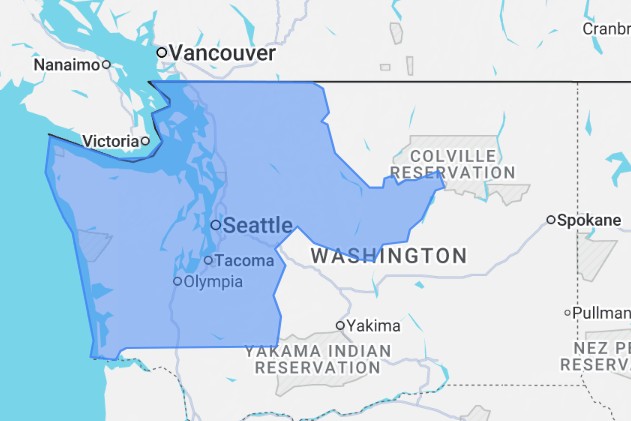
Want to Know Which of These Keywords Your Practice Is Actually Ranking For?
We offer a free AI visibility assessment for Seattle dental practices — we’ll check your current rankings and AI Local Pack inclusion for your highest-value keywords, identify where you’re visible and where you’re missing, and give you a prioritized list of what to fix first.
[Book your free dental practice visibility audit →]
(We take on a limited number of these per month — book now to get on this month’s schedule.)
Questions about your specific keyword situation or patient demographics? Leave them in the comments.