

By William, Freelance Writer, Award Winning Writer in 2022 and 2023
Search engine volume will drop by 25% as users switch to AI chatbots and virtual agents by 2026. This bold prediction from Gartner points to a transformation in how people search for information online.
AI systems currently process 30-50 million pages each day. Their efficiency remains nowhere near traditional crawlers like Googlebot – showing 47 times lower performance. Artificial intelligence search engine optimization is now a vital component to maintain visibility in this evolving digital world.
The results look promising. Recent studies reveal that AI optimization techniques can increase website visibility by up to 40%. Smaller websites have achieved even better results, with visibility gains of up to 115% when competing against larger corporate sites.
This piece will guide you through everything about AI SEO. You’ll learn about essential tools, techniques and strategies that will help your content excel in both traditional search results and AI-powered platforms.
What is AI Search Engine Optimization
“The development of full artificial intelligence could spell the end of the human race.” — Stephen Hawking, Theoretical physicist and cosmologist

Key differences from traditional SEO
The main difference between AI SEO and conventional methods shows up in how search engines process and understand information. Traditional SEO depended heavily on keyword matching and backlinks. Now, AI-powered algorithms like Google’s RankBrain use machine learning to understand the meaning behind searches and focus on context rather than exact keywords.
AI SEO brings several big advantages:
- Better Data Processing: AI tools look at so much data to spot patterns and trends. They process 30-50 million pages daily to find quality content for search, summarization, and question-answering.
- Semantic Understanding: AI algorithms understand how concepts connect with each other, instead of just counting keywords. This helps them show more relevant search results based on how users behave and what they’ve searched before.
- Personalization Capabilities: AI makes search results match what each person needs by looking at their behavior, location, and search history.
Why AI SEO matters now
You just need to adopt AI SEO quickly for several vital reasons. Research shows that over 96% of AI Overviews show up for searches where people want information. This change means content creators must cover topics in detail instead of just placing keywords.
Speed and simplicity are now essential – many AI systems must find content within 1-5 seconds. Websites must optimize their structure and load faster to stay visible in AI-powered search results.
AI significantly affects search visibility. Recent studies show that when Google’s Search Generative Experience (SGE) section expands, top links drop about 1,500 pixels down the page – like moving from first to tenth position in search results.
Traditional SEO metrics keep changing. Success now depends on:
- Content relevance and authority scores
- User engagement patterns
- Featured snippet visibility
- AI-generated result positioning
- Internal linking effectiveness
Businesses and content creators must understand these changes. Quality, original content that matches what users search for ranks better. The E-E-A-T (Experience, Expertise, Authoritativeness, and Trustworthiness) guidelines remain vital, whatever the content source – human or AI.
Getting Started with AI SEO Tools
The right artificial intelligence search engine optimization tools can substantially boost your success. Recent data shows that 68% of companies report higher SEO and content marketing ROI after implementing AI tools.
Essential AI tools for beginners
These tools will help you succeed:
- Content Optimization Tools: Platforms like RankIQ and Surfer analyze thousands of factors and suggest optimal word count, topics to cover, and keywords to include
- Technical SEO Automation: Tools like Alli AI streamline processes for on-page optimization tasks in any content management system
- Analytics and Monitoring: AI-powered platforms process big amounts of data and give you applicable information about website performance
Setting up your first AI SEO workflow

A proven framework has:
- Define Clear Parameters: Specify your target audience, content format, and relevant keywords
- Content Generation: Use AI tools to create original drafts based on informed insights
- Human Review: Add expertise and personal insights to raise the material’s value
- Quality Assurance: Build solid fact-checking and editing processes
Common mistakes to avoid
AI SEO tools are everywhere now, and you need to watch out for certain pitfalls. About 50% of marketers use AI for content creation, yet many make critical errors that affect their rankings.
Don’t rely too heavily on AI without human oversight. AI excels at processing data but sometimes produces inaccurate information or “hallucinations”. The core team’s expertise in the review process ensures content quality and accuracy.
There’s another reason why projects fail – using wrong tools for specific tasks. To cite an instance, general chatbots help with simple content creation but lack specialized features needed for complete keyword research or SERP analysis.
Poor quality content can hurt your rankings badly. Google’s spam policies identify using generative AI tools to create large volumes of content as scaled content abuse. Your focus should be on creating valuable, people-first content that lines up with search intent and user needs.
Optimizing Content for AI Search
AI search engines need a smart strategy to connect with your content. Search engines keep evolving, and you must know how to make your content AI-friendly to stay visible in search results.
Writing AI-friendly content

Your content should focus on these key elements to help AI understand better:
- Content Depth: AI models work best with detailed information that gives complete answers to user questions
- Response Time: Quick content retrieval matters because AI systems time out between 1-5 seconds
- Semantic Relevance: Related terms and concepts help AI grasp your content’s broader context
Using proper markup and structure
 Clean HTML, structured data, and optimized metadata are the life-blood of successful AI SEO strategies. Technical implementation plays a vital role in helping AI systems understand your content.
Schema markup has grown from a simple SEO boost to become crucial in AI-driven search. AI systems use this structured data to build knowledge graphs and extract insights more efficiently.
Here are the key technical aspects to think about:
- HTML Structure: Use clean, semantic HTML with proper heading hierarchy (H1-H6) and meaningful element tags like
<article>,<section>, and<nav> - Metadata Implementation: Add detailed meta descriptions, OpenGraph tags, and schema.org markup using JSON-LD format
- Content Organization: Put important information at the top of your HTML structure because AI crawlers might cut off content after timeout limits
- Technical Optimization: Your pages should load fast, ideally under one second, and stay bot-friendly
Schema markup improves AI visibility by a lot. Schema.org now offers 811 different types of markup, which lets AI understand your content better.
Your content management system should handle both simple schema types (usually 20-30 markups) and custom schemas. This flexibility helps categorize content more precisely and makes AI interpretation better.
Note that aggressive bot protection on platforms like Cloudflare or AWS WAF can block AI crawlers from seeing your content. It also helps to provide APIs or RSS feeds so AI can easily consume your content.
Measuring AI SEO Success
AI search engine optimization success depends on tracking specific metrics and setting achievable goals. The digital world changes rapidly, and you need to know what to measure to stay visible on AI-powered platforms.
Key metrics to track
Your measurement strategy should focus on key performance indicators (KPIs). These numbers show how well your content works in AI-driven search:
- Organic Traffic: Track visitors coming through search engines to measure overall visibility
- Keyword Rankings: Monitor position changes for target keywords in search results
- Click-Through Rate: Learn what percentage of users click your search listings versus impressions
- Domain Authority: See your website’s credibility based on backlinks and content quality
- Page Load Speed: Make pages load faster because they rank better
Tools for monitoring AI visibility

Other useful monitoring tools include:
- Platform-Specific Tools
- Google Search Console to track AI features and visibility
- Bing Webmaster Tools to monitor AI-powered queries
- Third-Party Solutions
- BrightEdge to get AI-driven SEO insights
- Semrush to optimize content across AI platforms
AI Search Grader gives you a full picture of brand sentiment and share of voice in AI search results. This helps you spot areas that need work.
Setting realistic goals
SMART goals (Specific, Measurable, Achievable, Relevant, Time-bound) help you make steady progress in AI SEO. Here are some realistic targets:
- 20% more organic traffic in six months
- 15% better conversion rates from organic traffic
- First-page rankings for five new keywords next quarter
- 10% lower bounce rate through better content
- 20 quality backlinks in three months
Right now, you need three steps to track progress:
- Regular Performance Reviews: Check your results against baselines regularly
- Adjustment Mechanisms: Update AI models based on what the data shows
- Long-term Value Assessment: See how this helps your business grow
Top companies report great returns from their AI work. All the same, measuring AI ROI brings its own challenges. This happens mainly because AI handles only part of a workflow while human resources stay the same.
Your metrics should match your business goals from the start. This creates a framework to measure both quick wins and long-term results. Keep watching and adapting your approach. This way, your AI SEO strategies stay strong as the digital world changes.
Future-Proofing Your AI SEO Strategy
“Machine intelligence is the last invention that humanity will ever need to make.” — Nick Bostrom, Director of the Future of Humanity Institute at Oxford University
AI search engine optimization continues to reshape the scene at an unprecedented pace. Recent data shows that 70% of businesses plan to use AI in some capacity by 2025. This marks a substantial jump from 50% in 2023.
Emerging trends to watch
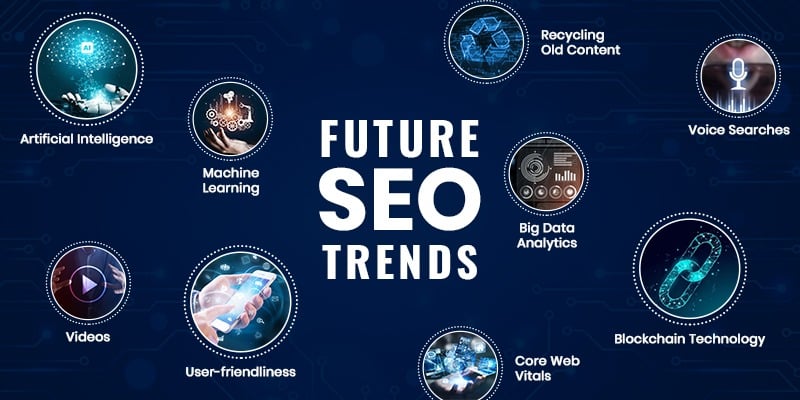
Voice and visual search optimization leads emerging trends. Smart devices continue to spread while AI improves the interpretation of voice commands and visual cues. These changes need optimization strategies that work with natural language patterns and visual elements.
Predictive analytics has become a game-changing capability. Businesses can now use machine learning algorithms to:
- Spot future trends before they become mainstream
- Find emerging topics within specific industries
- Study seasonal patterns to plan content
- Track changing audience priorities
Adapting to AI search updates
Success in the AI-driven search landscape needs strategic adaptation. Google’s helpful content update has cut unhelpful content within search results by 40%. Websites must now focus on high-quality, user-focused content that shows genuine expertise.
Experience joins the existing E-A-T framework, now E-E-A-T, which highlights the importance of first-hand expertise. Content quality matters more than keyword optimization because AI algorithms excel at understanding context.
Up-to-the-minute SEO adjustments have become vital as AI responds instantly to current trends and user behaviors. This approach needs:
- Regular content audits to improve or remove underperforming pieces
- Constant monitoring of AI visibility metrics
- Quick adaptation to algorithm changes
- Structured data implementation to help AI comprehension
Automated SEO processes have gained importance, but human oversight remains crucial. AI streamlines tasks like keyword research and content creation. This lets SEO professionals concentrate on strategic elements that machines cannot copy.
User experience (UX) now takes center stage. AI studies user interactions to suggest automatic improvements that make websites easy-to-use and engaging. AI-driven tools also require focus on technical optimization. Websites must maintain fast loading times and proper structured data implementation.
Search behavior has moved toward more natural queries. Content optimization must match natural speech patterns while maintaining technical excellence in implementation.
Moving Forward with SEO & AI
AI search engine optimization is at a significant turning point. Search behavior changes faster, and businesses must adapt to stay visible and successful. You need to balance AI tools with human expertise while creating high-quality, user-focused content.
Your success needs a balanced strategy: technical optimization, detailed content creation, and keeping up with emerging AI trends. On top of that, tracking performance through specific metrics helps ensure your strategies work and stay competitive.
Note that AI SEO needs constant learning and adaptation. Smart businesses will adopt these changes while focusing on delivering genuine value to users. If you need help with your site and what a world of SEO holds, call us at (206) 210-3398 or email us at hello@seattleorganicseo.com.
Your steadfast dedication to AI-driven search will pay off with better visibility, increased traffic, and stronger user involvement. These strategies can transform your online presence when you measure results and adjust your approach based on performance information.
Other Great Posts Offering Great SEO & AI Advice on the Same Topic:
-
Mastering SEO in the Age of AI: Essential Strategies for Enhanced Visibility
-
Unlocking AI Visibility: Strategies for Websites to Thrive in the Age of Generative Search
-
Future-Proofing Your Digital Presence: How to Optimize for AI Search Engines While Mastering Traditional SEO
-
Elevating Your Website’s Visibility in the Age of AI: Advanced Strategies Beyond Traditional SEO
-
How to Optimize Your Website for AI Queries: A Comprehensive Guide to Staying Ahead in the Age of Generative Search Engines
-
Preparing for AI-Driven Search
-
Mastering SEO for AI-Driven Search Engines: How to Optimize Your Website for ChatGPT, Gemini, Perplexity, and More
-
Beyond SEO: Optimizing Your Website for AI-Powered Search and Generative Content
-
Preparing Your Website for AI-Driven Search: A 2025 Guide to Dominating SEO and Generative Engine Results